

Realistic Masks Made in Japan Find Demand from Tech, Car Companies
Buy cheap HOKAJIN Realistic Masks online
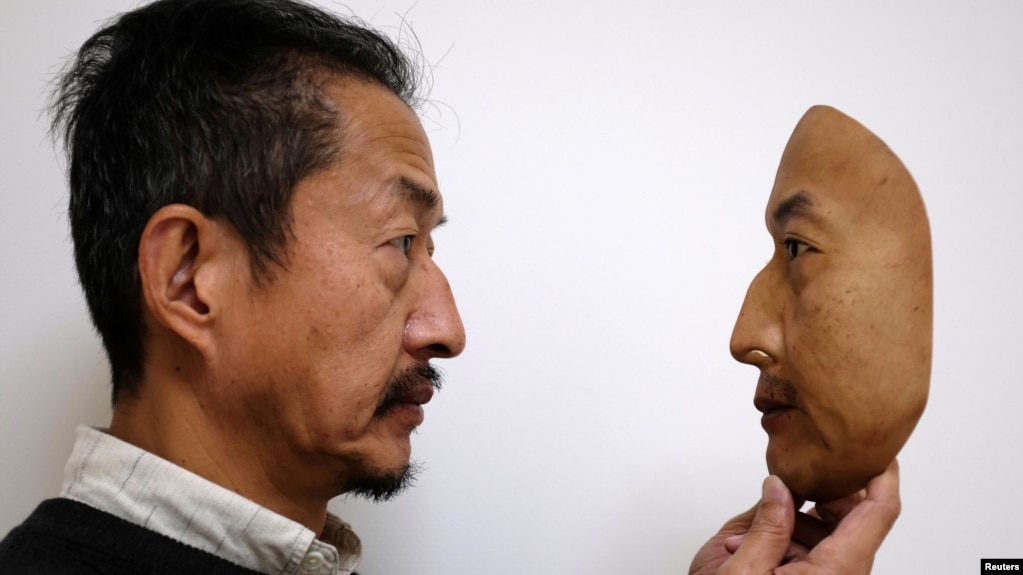
REAL-f Co. President Osamu Kitagawa holds a super-realistic face mask at his factory in Otsu, western Japan, Nov. 15, 2018.Buy cheap HOKAJIN Realistic Masks online
Super-realistic face masks made by a tiny company in rural Japan are in demand from the domestic tech and entertainment industries and from countries as far away as Saudi Arabia.
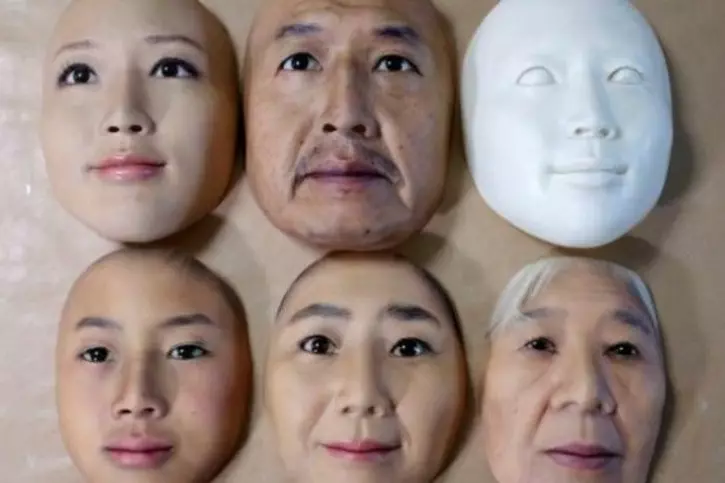
The 300,000-yen ($2,650) masks, made of resin and plastic by five employees at REAL-f Co., attempt to accurately duplicate an individual’s face down to fine wrinkles and skin texture.
Company founder Osamu Kitagawa came up with the idea while working at a printing machine manufacturer.
But it took him two years of experimentation before he found a way to use three-dimensional facial data from high-quality photographs to make the masks, and started selling them in 2011.
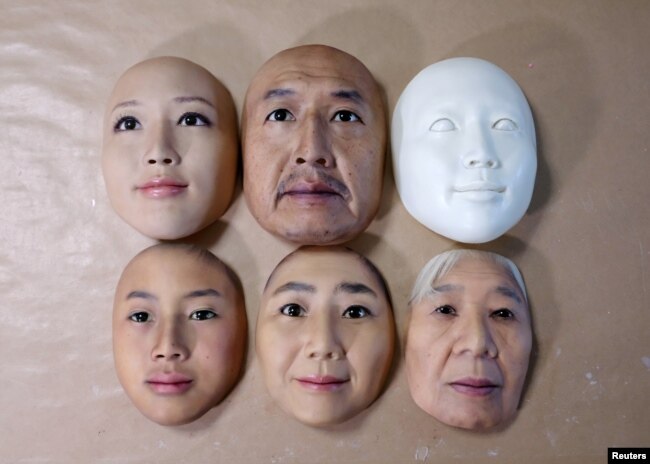
The company, based in the western prefecture of Shiga, receives about 100 orders every year from entertainment, automobile, technology and security companies, mainly in Japan.
For example, a Japanese car company ordered a mask of a sleeping face to improve its facial recognition technology to detect if a driver had dozed off, Kitagawa said.
“I am proud that my product is helping further development of facial recognition technology,” he added. “I hope that the developers would enhance face identification accuracy using these realistic masks.”
Kitagawa, 60, said he had also received orders from organizations linked to the Saudi government to create masks for the king and princes.
“I was told the masks were for portraits to be displayed in public areas,” he said.
Kitagawa said he works with clients carefully to ensure his products will not be used for illicit purposes and cause security risks, but added he could not rule out such threats.
He said his goal was to create 100 percent realistic masks, and he hoped to use softer materials, such as silicon, in the future.
“I would like these masks to be used for medical purposes, which is possible once they can be made using soft materials,” he said. “And as humanoid robots are being developed, I hope this will help developers to create [more realistic robots] at a low cost.”
These Realistic Face Masks Made By A Small Japanese Company Are An Instant Hit
The masks are made of resin and plastic by five employees at REAL-f Co. They attempt to accurately duplicate an individual’s face down to fine wrinkles and skin texture. Company founder Osamu Kitagawa came up with the idea while working at a printing machine manufacturer.
IndiatimesUpdated: Nov 16, 2018, 18:01 IST
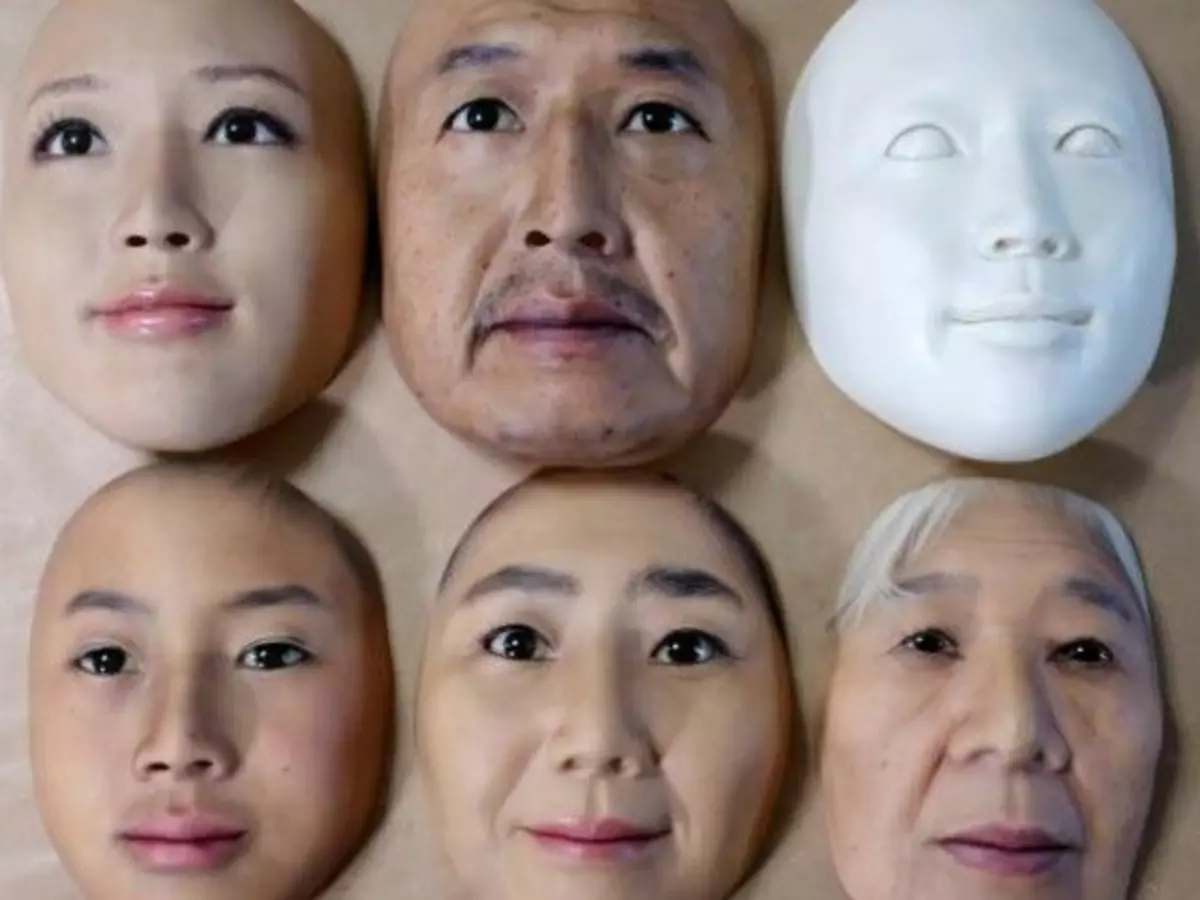
A tiny company in rural Japan makes face masks and these are so realistic that not only the domestic tech market but countries as far as Saudi Arabia is placing their orders.
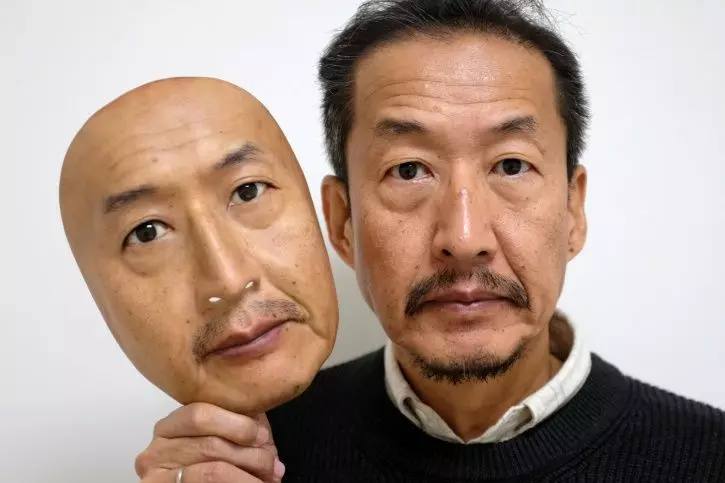
The 300,000-yen (USD 2,650) masks, made of resin and plastic by five employees at REAL-f Co., attempt to accurately duplicate an individual’s face down to fine wrinkles and skin texture.
reuters
Company founder Osamu Kitagawa came up with the idea while working at a printing machine manufacturer. But it took him two years of experimentation before he found a way to use three-dimensional facial data from high-quality photographs to make the masks, and started selling them in 2011.
The company, based in the western prefecture of Shiga, receives about 100 orders every year from entertainment, automobile, technology and security companies, mainly in Japan. For example, a Japanese car company ordered a mask of a sleeping face to improve its facial recognition technology to detect if a driver had dozed off, Kitagawa said.
“I am proud that my product is helping further development of facial recognition technology,” he added. “I hope that the developers would enhance face identification accuracy using these realistic masks.”
Kitagawa, 60, said he had also received orders from organisations linked to the Saudi government to create masks for the king and princes. “I was told the masks were for portraits to be displayed in public areas,” he said.
reuters
Kitagawa said he works with clients carefully to ensure his products will not be used for illicit purposes and cause security risks, but added he could not rule out such threats. He said his goal was to create 100 per cent realistic masks, and he hoped to use softer materials, such as silicon, in future.
“I would like these masks to be used for medical purposes, which is possible once they can be made using soft materials,” he said. “And as humanoid robots are being developed, I hope this will help developers to create (more realistic robots) at a low cost.”
A Japanese company is making eerily hyper-realistic masks
1 February 2019ShareSave
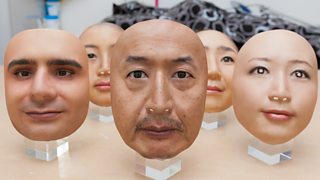
3:01Real-f makes eerily lifelike replicas of people’s faces (Credit: Terushi Sho)
Watch the video above and see if can you tell the masks from a human face

Real-f, based in Otsu, Japan, has pioneered the production of some uncannily lifelike masks.
The company uses 3D scanning and printing to reproduce the contours of the face, and the mask is then hand-crafted to replicate the finer features, with a photo affixed to the surface.
The masks have appeared as props in advertisements and music concerts, and automotive companies are now using them to train facial recognition software that can identify whether a driver is asleep at the wheel.
Watch the video above to find out more.
Video filmed and produced by Terushi Sho
Some hyper-realistic masks more believable than human faces, study suggests
Posted on 21 November 2019
Some silicone masks are now so realistic they can easily be mistaken for real faces, new research suggests.
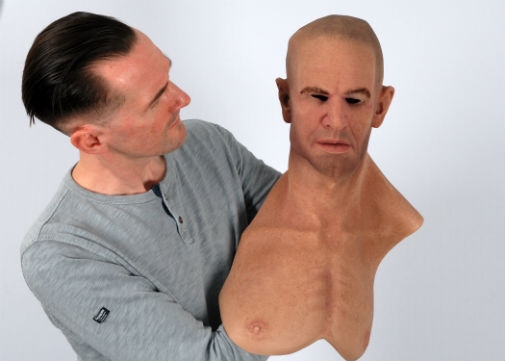
There are now dozens of criminal cases in which culprits have used hyper-realistic masks.
Hyper-realistic masks are made from flexible materials such as silicone and are designed to imitate real human faces – down to every last freckle, wrinkle and strand of real human hair.
In a study by the Universities of York and Kyoto, researchers asked participants to look at pairs of photographs and decide which showed a normal face and which showed a person wearing a mask.
Surprisingly, participants made the wrong call in one-in-five cases.
Everyday life
The 20% error rate observed in the study likely underestimates the extent to which people would struggle to tell an artificial face from the real thing outside of the lab, the researchers say
The researchers collected data from participants from both the UK and Japan to establish any differences according to race. When asked to choose between photographs depicting faces of a different race to the trial participant, response times were slower and selections were 5% less accurate.
Dr Rob Jenkins from the Department of Psychology at the University of York, said: “In our study participants had several advantages over ordinary people in everyday life. We made it clear to participants that their task was to identify the mask in each pair of images and we showed them example masks before the test began.
“The real-world error rate is likely to be much higher because many people may not even be aware hyper-realistic masks exist and are unlikely to be looking out for them.
“The current generation of masks is very realistic indeed with most people struggling to tell an artificial face from the real thing.”
Criminal cases
There are now dozens of criminal cases in which culprits have passed themselves off as people of a different age, race or gender, sending police investigations down the wrong path.
In one recent case, an international gang used a hyper-realistic mask to impersonate a French minister, defrauding business executives out of millions of pounds.
Dr Jet Sanders, who worked on the study while a PhD student at the University of York, said: “Failure to detect synthetic faces may have important implications for security and crime prevention as hyper-realistic masks may allow the key characteristics of a persons’ appearance to be incorrectly identified.
“These masks currently cost around £1000 each and we expect them to become more widely used as advances in manufacturing make them more affordable.”

